Posted on May 19, 2026
Honestly, we all want that perfectly bright, confident smile. But if you’re like most people in Westerville, Ohio, you’ve probably noticed your teeth aren’t quite as dazzling as they used to be.
You know what? That is completely normal. Between our morning coffee runs, the occasional glass of red wine, and just the natural aging process, our teeth take a bit of a beating when it comes to maintaining their natural white color.
At Arch City Dental, we hear the same questions every week: “Why did my teeth change color?” and “Does professional teeth whitening actually work?” Let me explain the science behind teeth whitening, what options you really have, and why seeing a professional dentist in Westerville or Grandview is the smartest move you can make for your smile.
Before we get into how to fix the problem, we need to understand why it’s happening. Over time, your teeth can go from brilliant white to not-so-bright for several very common reasons.
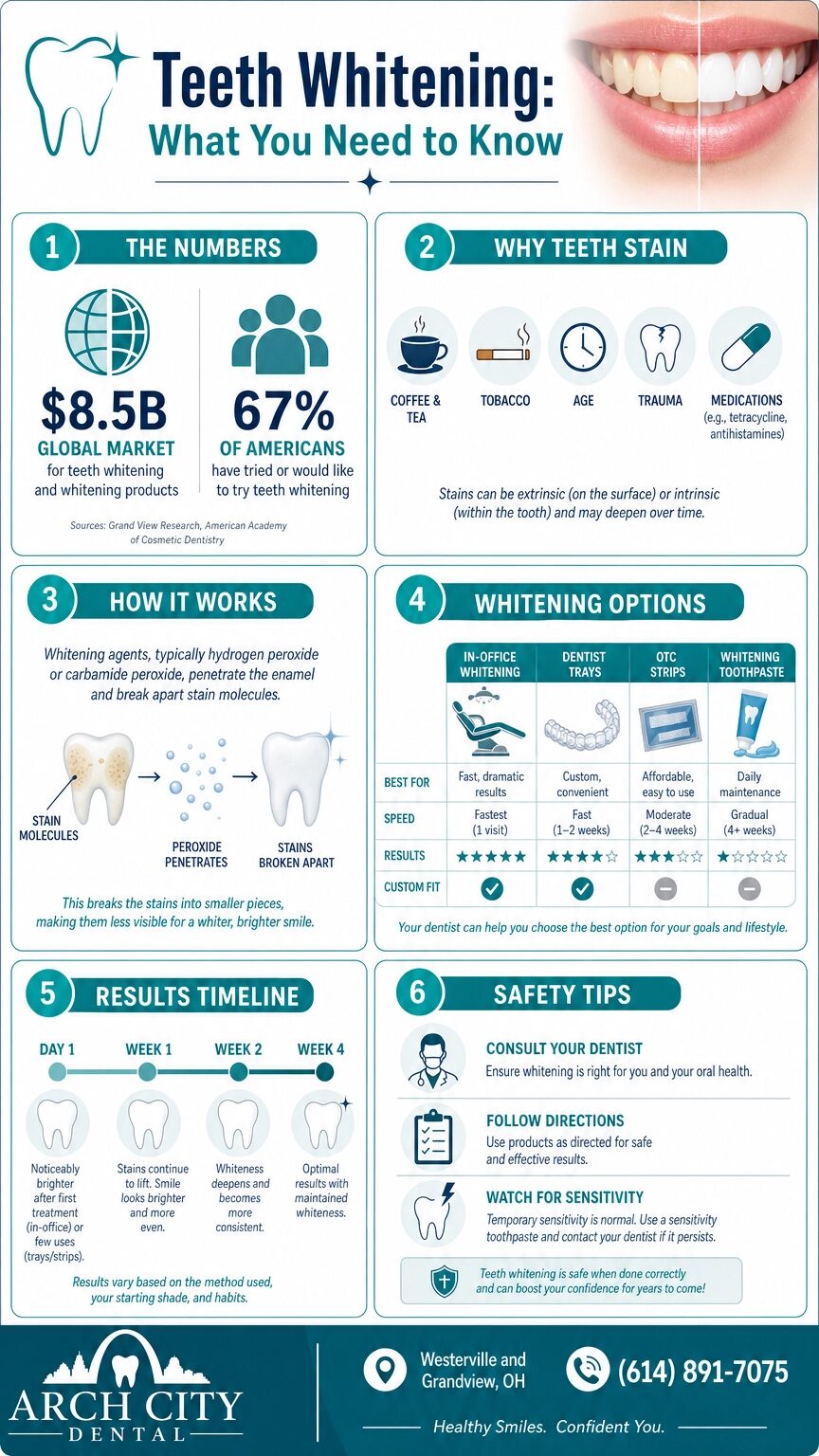
Coffee, tea, and red wine are some of the major staining culprits. What do they have in common? They contain intense color pigments called “chromogens”—tiny molecules that attach themselves directly to the white, outer part of your tooth (the enamel). If you’re sipping on dark liquids daily, you’re gradually painting your teeth a slightly darker shade.
Two chemicals found in tobacco create incredibly stubborn stains: tar and nicotine. Tar is naturally dark and leaves a sticky residue. Nicotine, on the other hand, is completely colorless – until it’s mixed with oxygen. Then, it turns into a yellowish, surface-staining substance that is notoriously difficult to brush away.
Here’s the thing: below the hard, white outer shell of your teeth (the enamel) is a softer, naturally yellowish area called “dentin.” Over time, the outer enamel layer gets thinner from years of brushing, chewing, and acidic foods. As the enamel thins, more of that yellowish dentin shows through, making your teeth appear darker regardless of how well you brush.
If you’ve been hit in the mouth, your tooth may change color because it reacts to the injury by laying down more dentin to protect the nerve. Because dentin is darker than enamel, the tooth appears discolored. Additionally, tooth darkening can be a side effect of certain antihistamines, antipsychotics, and high blood pressure medications. Young children exposed to antibiotics like tetracycline and doxycycline when their teeth are forming may have discoloration of their adult teeth later in life. Even treatments like chemotherapy and head and neck radiation can darken teeth.
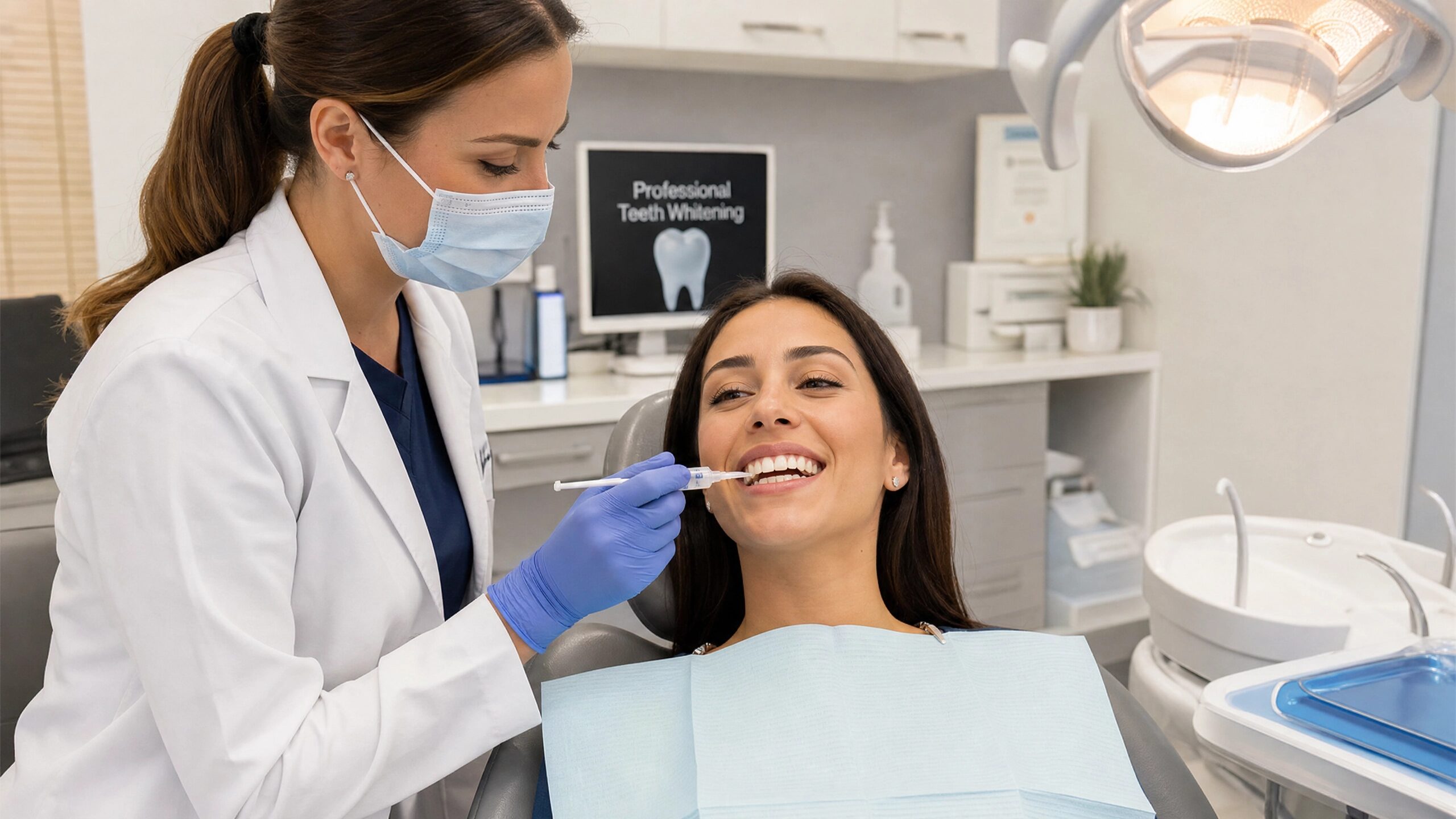
Teeth whitening isn’t magic—it’s pure chemistry. The process is surprisingly simple when you break it down.
Professional whitening products contain one of two active tooth bleaches: hydrogen peroxide or carbamide peroxide. When these bleaches are applied to your teeth, they penetrate the porous enamel and reach the discolored molecules inside. The active oxygen molecules from the bleaching agents react with the discolored molecules, literally breaking the stains apart into much smaller pieces. Because the stain molecules are now smaller and less concentrated, your teeth appear brighter and whiter.
No. And this is exactly why it’s critical to talk to your dentist before deciding to whiten your teeth. Whiteners cannot correct all types of discoloration. Yellow teeth will probably bleach exceptionally well. Brown teeth may not respond as effectively. Teeth with gray tones or severe medication-induced stains may not bleach at all using standard methods.
Furthermore, whitening will absolutely not work on caps, veneers, crowns, or fillings. If you have dental restorations on your front teeth, whitening the natural teeth around them will result in a mismatched, uneven smile—which is why a professional consultation is so important before you start any whitening treatment.
If you’re considering teeth whitening, you’re in very good company. The desire for a brighter smile is universal, and the data backs it up.
The global teeth-whitening market was valued at an astounding $8.5 billion in 2024, and it is projected to grow to over $10.6 billion by 2030. In the United States alone, approximately 67% of adults have tried to whiten their teeth at some point. Why the massive surge in popularity? Because modern professional whitening is safer, faster, and more effective than ever before.
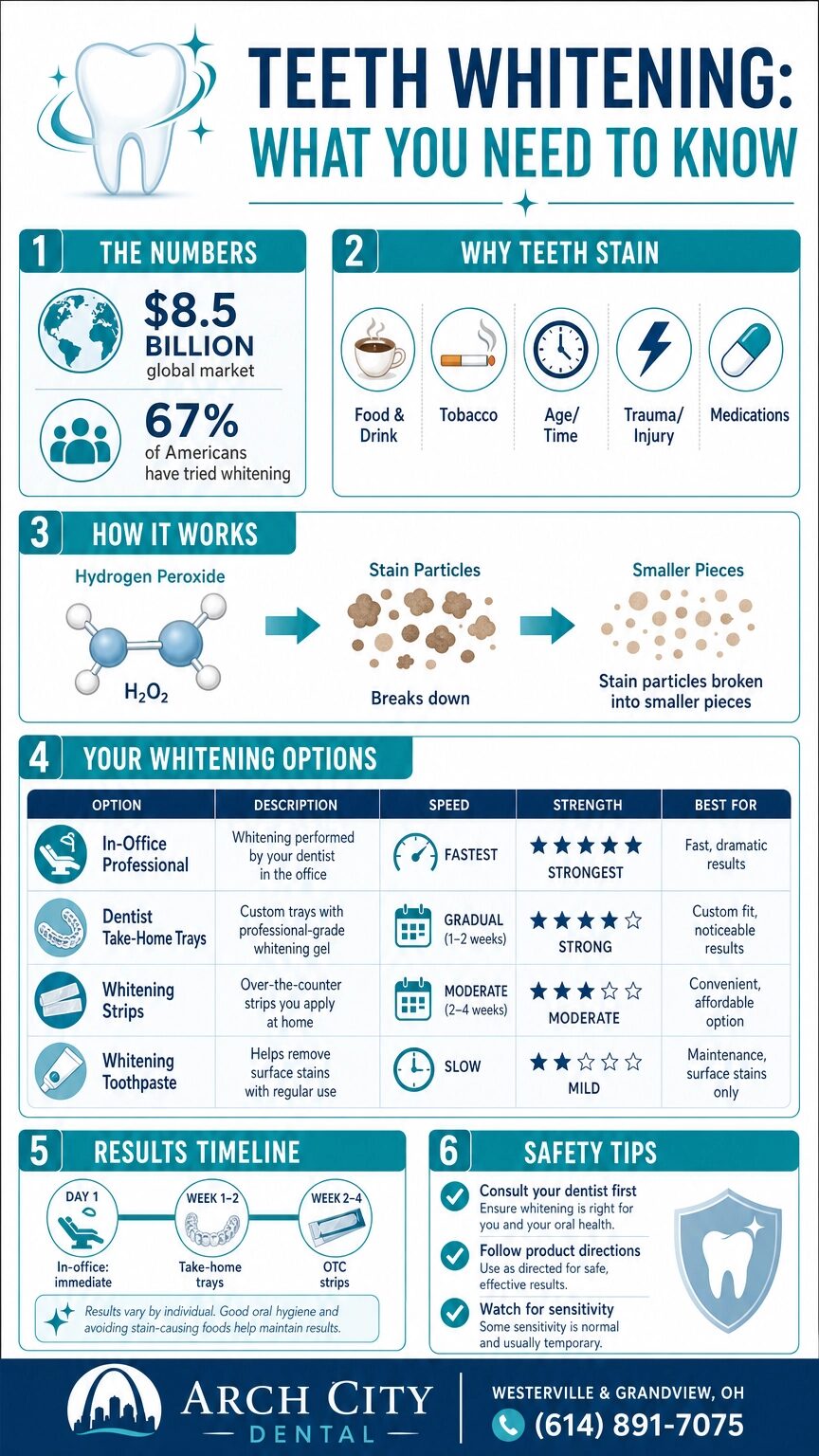
If you are a good candidate for whitening, you generally have four paths you can take to put the shine back in your smile. Let’s compare them honestly.
This procedure, often called chairside bleaching, usually requires only one office visit to our Westerville or Grandview locations. The dentist will apply a protective gel to your gums or a rubber shield to protect your soft tissues. Then, a highly concentrated, professional-grade bleach is applied directly to the teeth. This is the fastest, most dramatic way to whiten your teeth—often lightening your smile by several shades in just a single appointment.
Your dentist can provide you with a custom-made tray designed specifically for your mouth—not a generic, one-size-fits-all tray from a drugstore shelf. We give you a professional-strength bleaching solution and exact instructions on how to place the gel and how long to wear it. This is a fantastic option if you prefer whitening in the comfort of your own home at a slightly slower pace but still want the safety, guidance, and superior results that come from working with a dental professional. This process usually takes a few days to a few weeks.
You’ve seen the options at your local Westerville grocery store: strips, gels, and one-size-fits-all trays. The concentration of the bleaching agent in these products is significantly lower than what your dentist uses. While they can be somewhat effective for minor, surface-level stains, they take much longer to show results and lack the custom fit of professional trays, which can lead to uneven whitening and irritated gums. If you choose this route, always look for products with the ADA Seal of Acceptance.
All toothpastes help remove surface stains through mild abrasives. Whitening toothpastes have additional polishing agents that provide better stain removal effectiveness. However, unlike bleaches, these products do not change the actual color of your teeth – they only scrub away surface stains. Think of them as maintenance, not transformation.
| Whitening Method | Speed | Strength | Custom Fit | Best For |
|---|---|---|---|---|
| In-Office Professional | 1 visit | Highest | Yes | Fastest, dramatic results |
| Dentist Take-Home Trays | 1–3 weeks | High | Yes | Gradual, comfortable results |
| OTC Strips/Gels | 2–4 weeks | Moderate | No | Budget-conscious, mild stains |
| Whitening Toothpaste | Ongoing | Surface only | No | Daily maintenance |
Safety is our top priority at Arch City Dental. When performed under the supervision of a dentist, teeth whitening is incredibly safe. However, there are a few temporary side effects worth knowing about.
Some patients experience tooth sensitivity during or immediately after treatment. This happens when the peroxide gets through the enamel to the soft layer of dentin and temporarily irritates the nerve of your tooth. In almost all cases, this sensitivity is mild and temporary. If it occurs, we can delay treatment or adjust the concentration of the gel to make the process more comfortable.
Overuse of over-the-counter whiteners without professional guidance can actually damage tooth enamel or burn your gums over time. This is precisely why professional supervision matters so much.
Over 10 years of clinical use of teeth-whitening products containing 10% carbamide peroxide have shown absolutely no damage to existing fillings. Furthermore, there is zero clinical evidence that the professional teeth whitening process has any harmful, long-term effects on the health of a tooth’s nerves. The American Dental Association considers professionally supervised whitening to be safe and effective when used as directed.
At Arch City Dental, we don’t just hand you a box of strips and wish you luck. We conduct a thorough examination to ensure your teeth and gums are healthy enough for whitening, identify the specific type of staining you have, and recommend the exact treatment that will give you the best possible results for your unique smile.
We serve patients throughout Westerville, Grandview Heights, Dublin, Powell, New Albany, and the greater Columbus area. Whether you visit our Westerville location at 191 W Schrock Rd or our Grandview location at 891 Yard Street, you’re getting expert, personalized care from a team that genuinely cares about your smile.
Ready to start your smile journey? Contact Arch City Dental today to schedule your whitening consultation or explore our full range of dental services to see how we can help you achieve the smile you’ve always wanted.
Results can last anywhere from six months to three years. The longevity of your bright smile depends heavily on your lifestyle habits. If you smoke or consume a lot of coffee, tea, or red wine, your teeth will stain more quickly. Using a straw for dark beverages and maintaining excellent oral hygiene will help your results last significantly longer.
Absolutely. While over-the-counter products are cheaper upfront, they require continuous purchasing to maintain results and often cause uneven whitening or gum irritation. Professional whitening provides immediate, dramatic, and even results safely, making it a much better long-term investment in your smile and confidence.
The procedure itself is painless. Some patients experience temporary sensitivity to hot and cold for a day or two after treatment. We take special precautions to protect your gums during in-office treatments, and we can provide desensitizing toothpaste to help manage any temporary discomfort.
Yes, but you should do it under the supervision of a dentist. We can customize the concentration of the bleaching agent and the duration of the treatment to ensure you get a whiter smile without triggering severe sensitivity. We may also recommend specific desensitizing protocols before you begin.
The cost varies depending on whether you choose in-office whitening or custom take-home trays. During your consultation at Arch City Dental, we will discuss all pricing options transparently so you can choose the best fit for your budget and goals. We also offer flexible financing options—visit our Financing & Insurance to learn more.
No – whitening agents only work on natural tooth enamel. They will not change the color of crowns, veneers, fillings, or bonding. If you have visible dental restorations, we’ll discuss your options during your consultation to ensure a natural, consistent result.
We recommend avoiding dark-colored foods and beverages—coffee, tea, red wine, tomato sauce, and berries—for at least 48 hours after your whitening treatment. This is when your enamel pores are most open and most susceptible to restaining.
This article was reviewed for clinical accuracy and reflects the professional standards and patient care philosophy of Arch City Dental, serving Westerville, Grandview Heights, and the greater Columbus, Ohio area.
Find us here
We are delighted to welcome you to our practice and are pleased that you chose us to serve your dental needs.
Find us here
We are delighted to welcome you to our practice and are pleased that you chose us to serve your dental needs.